





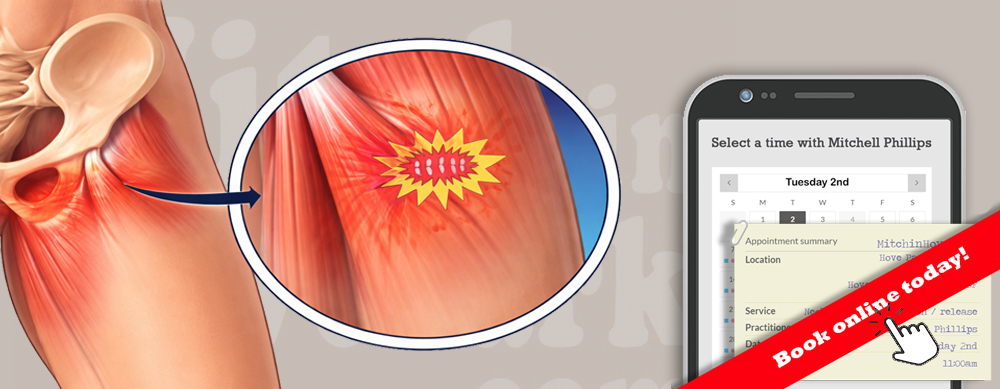
Adductor strain, groin pain
Groin (adductor) strains are commonly caused by overstretching in sports often seen during movements like the box splits. I see these regularly, particularly when working with dancers.
Main Causes of Adductor (Groin) Strains
1. Overstretching (most common)Sudden wide movements (e.g. lunges, splits, change of direction) common in:
- footballers
- dancers
- martial artists
This is your classic “gone too far, too fast” injury.
2. Sudden acceleration or change of direction
- Sprinting
- Cutting / twisting movements
- Kicking (especially in football)
The adductors work hard to stabilise and control the leg, so they get overloaded quickly.
3. Poor warm-up or fatigue
- Cold muscles = less flexibility
- Tired muscles = less control
Pain is often felt high up in the groin, but the actual injury can sit further down along the length of the adductor muscles. These include:
- Adductor longus (the longer, more commonly injured muscle)
- Adductor magnus (the largest of the group)
- Adductor brevis (a smaller, deeper muscle within the groin)
Which grade of soft tissue injury could you have?

Irrespective of whether you have a quad, hamstring or calf injury, soft tissue injuries tend to come in 3 levels of grades:
Grade 1. Small level of soft tissue damage, possible to continue with sports providing it doesn't get worse.
Grade 2. A medium muscle strain which you really need to consider whether it's wise to continue.
Grade 3. A full rupture, you'll know if it's a full rupture as you'd be likely to be carried off rather than walk.
Grade sprains / strains arent always as easy to determine as 1,2 or 3. Sometimes it can be a 1.4/5 or a 2.3 or 2.4. Never the less, anything in the 2's must be evaluated very seriously as you certainly don't want a low level 2 becoming a high level 2 simply for the sake of hitting your target training run. Needless to say, the higher the grade, the longer it'll take to repair and recover. Some of us learn this the hard way!