





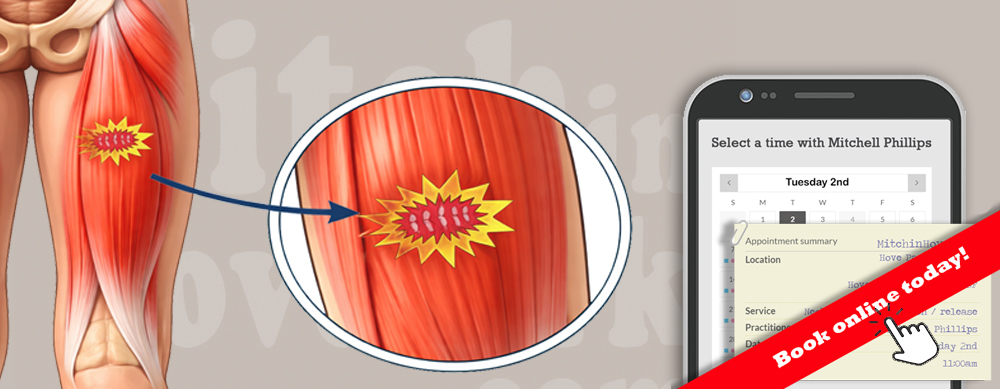
Hamstring Strain Treatment in Brighton & Hove
If the quadriceps are the accelerator, the hamstrings are the brakes. The quads (front thigh muscles) drive movement by pushing against gravity, making them the dominant force. The hamstrings act in opposition, controlling and slowing movement, which makes them particularly vulnerable to injury. Sometimes hamstring pain can be felt high into the origin (top of hamstring into base of glute). This doesn't always mean that that's the point of injury as sometimes the hamstring pulls short causing where it attaches to feel irritated.
If you suspect a hamstring strain, stop immediately. Apply ice to cool the area (not freeze it), and give it time to settle. After a few days, it’s worth getting it assessed properly so you can start a structured recovery and avoid long-term issues.
Which grade of soft tissue injury could you have?

Irrespective of whether you have a quad, hamstring or calf injury, soft tissue injuries tend to come in 3 levels of grades:
Grade 1. Small level of soft tissue damage, possible to continue with sports providing it doesn't get worse.
Grade 2. A light muscle strain which in 'competition mode' you might continue just to 'get the job done'.
Grade 3. A full rupture, you'll know if it's a full rupture as you'd be likely to be carried off in a stretcher.
Grade sprains / strains arent always as easy to determine as 1, 2 or 3. Sometimes it can be a 1.4/5 or a 2.3 or 2.4. Never the less, anything in the 2's must be evaluated very seriously as you certainly don't want a low level 2 becoming a high level 2 simply for the sake of hitting your target training run. Needless to say, the higher the grade, the longer it'll take to repair and recover. Some of us learn this the hard way!
If your hamstring strain isn’t improving, or you’re worried about pulling it again, it’s worth addressing it properly before it becomes a recurring issue.
The right approach can get you back moving confidently and reduce the risk of it happening again.